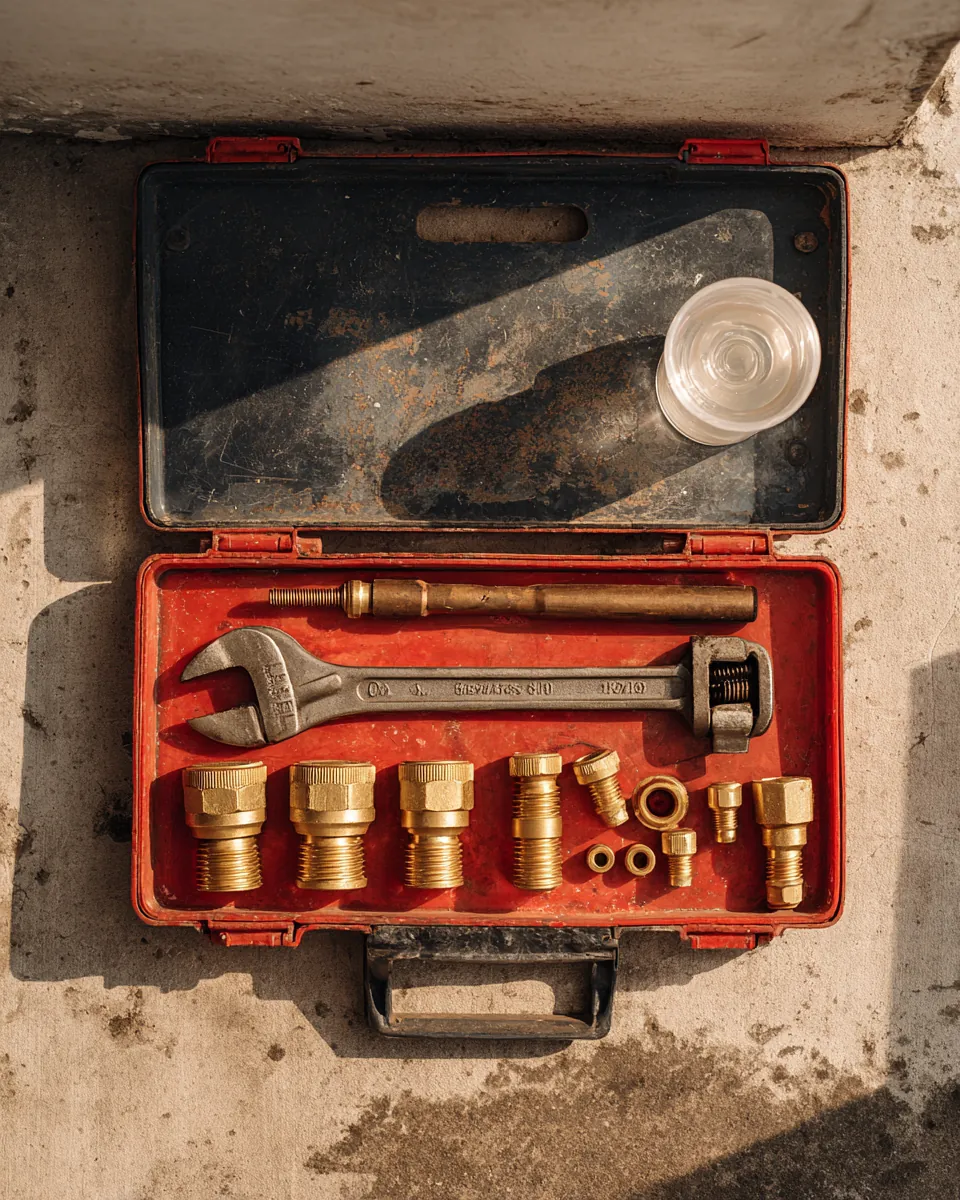
A $2,500 loan often appears at the moment a repair or health expense turns out to be bigger than expected. A small leak becomes a section of corroded pipe, or a routine appointment leads to tests and a specialist visit. At that point the bill is too large for one paycheck, and most people want a clear plan rather than a growing card balance. Rather than lending money itself, Northern Star Loan acts as a no-cost go-between: your request travels to independent lenders, and each one chooses whether to extend a 2500 dollar loan and what APR to attach. This guide covers realistic uses, estimated payments, documents, credit and how to size the request correctly.
Who usually needs a $2,500 loan?
A $2,500 personal loan tends to be requested by homeowners and renters facing repair bills, people covering out-of-pocket medical costs, and households whose emergency savings covered part of a cost but not all of it.
A typical borrower at this level already has some savings and has used them. Maybe they paid the first $1,000 of a plumbing job in cash and need the rest. Maybe they are a retiree on a fixed income who wants to keep a cash reserve intact instead of draining it for one bill. The common thread is a cost that is necessary, specific and time-sensitive, plus a wish to spread it over a year or more with a payment that does not change.
This group also includes a growing number of older borrowers. People in their sixties and seventies often have steady income from Social Security or a pension and good payment histories, and many lenders are comfortable reviewing those income sources.
Repayment Options for a $2,500 Loan
6 months
$446/mo
Est. total interest $178
12 months
$236/mo
Est. total interest $337
18 months
$167/mo
Est. total interest $502
Estimates at a representative 24% APR with no fees. Your actual APR, term and payment are set by the lender and may be higher or lower.
Common situations a $2,500 personal loan can cover
Plumbing and water-damage repairs, out-of-pocket clinic and specialist costs, major vehicle work and essential appliance replacements are among the most frequent reasons people request about $2,500.

A plumbing repair that grew
A homeowner notices a damp patch under the kitchen sink. The plumber opens the wall and finds that a section of old galvanized supply line has corroded, along with a failing shutoff valve. The quote to replace the run, install new fittings and patch the drywall comes to $2,300. Leaving it means risking water damage that would cost far more. A $2,500 personal loan covers the job and the patch-and-paint work afterward.
A clinic visit and follow-up care
A man in his sixties goes in for a check-up, and his doctor orders imaging and a specialist consultation. After insurance, his share comes to about $2,200 across several bills. He could set up separate payment plans with each provider, or consolidate them into one fixed payment. Either can work; the comparison section below shows how to decide.
Vehicle work beyond basic maintenance
Replacing a transmission component, a catalytic converter or a full set of tires plus an alignment can approach this amount, especially on trucks and SUVs.
Essential home systems
A water heater replacement with installation, a furnace repair in winter or an emergency electrical panel fix can each fall in the $1,500 to $3,000 range.
Estimated payments on a $2,500 loan
A $2,500 loan typically costs about $226 to $251 a month over 12 months, $121 to $148 over 24 months, or $87 to $115 over 36 months at APRs between 15% and 35.99%.
The figures use the standard amortization formula, with the monthly rate equal to APR divided by twelve. Fees are not included.
| APR | 12 months | 24 months | 36 months |
|---|---|---|---|
| 9% | $218.63 ($124 interest) | $114.21 ($241 interest) | $79.50 ($362 interest) |
| 15% | $225.65 ($208 interest) | $121.22 ($409 interest) | $86.66 ($620 interest) |
| 24% | $236.40 ($337 interest) | $132.18 ($672 interest) | $98.08 ($1,031 interest) |
| 35.99% | $251.14 ($514 interest) | $147.61 ($1,043 interest) | $114.50 ($1,622 interest) |
Read across a row to see the effect of time and down a column to see the effect of credit. Take the 24% APR row: tripling the term from 12 months to 36 shaves roughly $138 off each payment, yet the interest bill grows about threefold. Moving from 35.99% to 15% APR on a 24-month term saves about $634, which is a strong argument for comparing offers and improving credit where possible.
Representative example for $2,500
Representative example: a $2,500 loan over 24 months at 21% APR costs about $128.46 a month, about $583 of interest and close to $3,083 repaid overall. Treat these as estimates, since the lender you choose sets the final terms.
In the first month of that loan, about $43.75 of the payment goes to interest and roughly $84.71 to principal. By month twelve the balance is down to about $1,380, and by the final payment almost the entire amount reduces principal. If the borrower adds $30 a month from the start, the loan finishes about five months early and the interest falls by roughly $130, assuming the lender allows prepayment without a penalty.
$2,500 loan vs provider payment plans
Provider payment plans are often interest-free and should be checked first, whereas a $2,500 personal loan tends to fit better if a contractor wants payment before starting, combine several bills or avoid short, aggressive plan deadlines.
Medical offices and hospitals frequently offer monthly plans with no interest, and some will reduce a bill for prompt payment or financial hardship. That is usually cheaper than any personal loan. A loan can still be the better tool when:
- The provider requires a large monthly amount to clear the bill in only a few months.
- You have several separate bills and want one payment and one due date.
- A contractor, such as a plumber, wants payment on completion and offers no financing.
- A bill is about to go to collections, and paying it off promptly protects your credit.
For home repairs, ask whether the contractor offers financing through a partner, then compare that APR and term with what independent lenders offer. Get every figure in writing before deciding.
Check insurance and warranties before borrowing
Homeowners insurance, renters coverage, home warranties and health plan appeals can sometimes pay part of a repair or medical bill, which can shrink the amount you need or remove the need for a personal loan entirely.
Water damage from a sudden pipe burst is often treated differently from slow leaks or wear, so it is worth calling your insurer before the plumber finishes and asking what the policy covers. Take photos of the damage and keep every receipt. If you have a home warranty, read whether it covers plumbing lines, fixtures or water heaters, and what the service fee is. Even partial coverage can turn a large repair into a much smaller one.
On the medical side, review the explanation of benefits from your health plan line by line. Billing errors, duplicate charges and services coded incorrectly are more common than many people expect. Ask the provider for an itemized statement, and if a claim was denied, ask about the appeal process. Many hospitals also have financial assistance programs based on income, and some apply them to patients with insurance as well. Taking an hour to check these options can reduce the bill before you compare personal loans, and a smaller balance means a smaller payment for every month of the term.
Budgeting a personal loan payment on a fixed income
Borrowers on fixed incomes should keep the payment small enough that rising costs for groceries, utilities or prescriptions will not squeeze it, which usually means choosing a longer term or a smaller amount.
A retiree receiving $2,600 a month from Social Security and a small pension has little room to absorb surprises, because the income rarely changes. Suppose fixed costs already take $2,200. A 12-month payment of around $236 would leave about $164 for everything else, which is tight. A 24-month term at the same 24% APR lowers the payment to roughly $132, leaving about $268 a month. The longer term costs more interest, about $672 instead of $337, but it may be the only version that fits safely.
For people on a fixed income, a few habits help a personal loan stay manageable:
- Schedule autopay a day or two after the benefit deposit arrives.
- Keep at least one month’s payment in checking as a buffer.
- Avoid adding new card balances while the loan is outstanding.
- Confirm the lender permits early payoff so an unexpected refund or gift can shorten the term.
Working adults with variable hours can use the same logic. Base the payment on a slow month, not an average one, and any extra in busy months can go toward the balance.
Documents and conditions lenders typically review
Lenders typically verify identity, income and banking details and confirm basic conditions such as age and state of residence, with retirees and wage earners documenting income in slightly different ways.
- Identity: your Social Security number plus a current photo ID issued by a government agency.
- Wage income: recent pay stubs and bank statements showing deposits.
- Retirement income: a Social Security benefit letter, pension statement or annuity documentation, plus bank statements.
- Bank account: a checking account you own and use regularly, so the lender can deposit funds and set up autopay.
- Contact details: a current address, phone number and email.
Lenders also look at your debt-to-income ratio: the share of pre-tax monthly income already committed to debt payments. Suppose you bring in $4,000 a month and already pay $900 toward debts: your ratio sits at 22.5%; adding a $121 payment brings it to about 25.5%. The page covering personal loan eligibility criteria explains why many lenders prefer that number to stay moderate.
How credit history affects a $2,500 loan
A stronger credit profile usually earns a lower APR on a $2,500 loan, while a thinner or weaker history can still lead to offers, typically at higher rates or with smaller approved amounts.
Lenders look at your score, recent late payments, how much of your available revolving credit you use and how long your accounts have been open. Quotes from mainstream lenders usually land somewhere between roughly 6% and 35.99% APR, though pricing may go higher with lenders whose focus is fair or poor credit. A lender may also counter with a smaller amount than you requested, such as $2,000 instead of $2,500, if your income or debt load suggests a lower payment is safer.
Inquiries
Sending in your $2,500 request is typically a soft check that leaves credit scores untouched. Only after an offer is accepted and the application moves ahead might the lender pull your report formally.
Protecting your score during repayment
On-time payments reported to the credit bureaus can help over time. If money gets tight, contact the lender before a payment is missed; some offer a one-time due date change or hardship options.
For a full picture of how APR varies with credit tier and term, see our summary of typical personal loan APRs.
Is $2,500 the right amount, or should you borrow less or more?
The right request equals the written estimate plus any origination fee and a small buffer for likely surprises, so a $2,500 loan fits best when the cost sits between roughly $2,100 and $2,400.
Repairs carry uncertainty. Plumbers and mechanics often find extra work once they open a wall or lift a car. Ask the contractor how likely additional work is and what it might cost, and include a modest cushion rather than guessing high. If the estimate is closer to $1,800, a $2,000 personal loan may be the better size and will cost less in interest. If the final bill is clearly above $2,800, consider a larger amount once instead of returning for a second loan.
Remember origination fees as well. With a 5% fee deducted up front, a $2,500 personal loan delivers about $2,375. If the plumber’s invoice is $2,450, that shortfall matters.
Requesting a $2,500 loan through Northern Star Loan, step by step
You fill out one secure form, Northern Star Loan passes the details to independent lenders, and you review any offers on your own schedule before deciding whether to accept one.
- Request: enter the amount, purpose, income source and contact information.
- Match: your details go out to Northern Star Lending partners whose loan sizes span $500 to $5,000.
- Review: compare APR, term, monthly payment, fees and total repayment. You are not obligated to accept any offer.
- Finalize: once you pick an offer, that lender confirms your details, shares the final contract, then deposits the money and manages your repayments.
Some lenders deposit money within one business day after they finish approval and verification, while others need several business days. If a contractor needs payment on a specific date, allow a little extra time.
Practical steps before requesting $2,500
Before borrowing, collect a written estimate, ask providers about payment plans or discounts, decide on a comfortable monthly payment and gather income documents so lender verification goes smoothly.
- Get the estimate or itemized bill in writing.
- Ask about interest-free plans, prompt-pay discounts or hardship reductions.
- Choose a payment ceiling based on your monthly budget, not the maximum a lender might offer.
- Have your ID, recent pay stubs or benefit letters and bank statements ready.
- Compare every offer by APR and total repayment, then pick the shortest term you can manage.
Treat the loan as a tool for one clearly defined cost. Once it is repaid, rebuilding even a small emergency fund makes the next pipe or clinic bill far easier to handle.
Frequently Asked Questions
What does a $2,500 loan cost per month over three years?
Over 36 months, a $2,500 loan costs about $86.66 a month at 15% APR or about $114.50 a month at 35.99% APR. Total interest ranges from roughly $620 to $1,622. These are estimates; lenders set actual terms.
Can retirees use Social Security or pension income for a $2,500 personal loan?
Many lenders count regular retirement income such as Social Security, pensions or annuity payments, provided you can document it with award letters or bank statements. Each lender sets its own income rules.
Should I borrow before or after a plumber gives a final price?
When possible, request a loan after you have a written estimate, and ask the contractor how likely extra work is. Borrowing slightly above the estimate can cover small surprises without forcing a second loan.
Can a $2,500 loan cover a medical bill already sent to collections?
A loan can be used to pay it, but first ask the provider or collector whether a reduced lump-sum settlement or an interest-free payment plan is available, since either may cost less than borrowing.