
A $2,000 loan sits in a useful middle ground. It is large enough to cover a real purchase or a serious repair, yet small enough that most borrowers can repay it within one to two years without a heavy monthly payment. People often reach this amount when a single cost is too big for one paycheck but too small to justify a long-term commitment. Northern Star Loan is a free connector service rather than a lender, so your request travels to independent lenders, and those lenders handle each credit decision on their own. Below you will find realistic uses, payment estimates, cost traps and a way to decide whether two thousand is the amount you need.
Who typically borrows $2,000?
A $2,000 loan is commonly requested by people investing in something that earns or saves them money, such as work equipment, or by households replacing a costly item they use every day.
Compared with smaller requests, this amount is less often about a sudden breakdown and more often about a planned purchase that cannot wait for months of saving. A self-employed photographer who needs a new lens before a booked wedding season, a family whose old couch finally collapsed, a remote worker setting up a proper desk and chair, or someone covering an insurance deductible after an accident all fit this profile.
Borrowers here also tend to compare more carefully. At two thousand dollars, the difference between a 12% and a 30% APR over two years is several hundred dollars, so shopping around matters more than it does on very small amounts.
Repayment Options for a $2,000 Loan
6 months
$357/mo
Est. total interest $142
12 months
$189/mo
Est. total interest $269
18 months
$133/mo
Est. total interest $401
Estimates at a representative 24% APR with no fees. Your actual APR, term and payment are set by the lender and may be higher or lower.
Four realistic uses for a $2,000 personal loan
Common uses include work gear for freelancers, furniture and appliances for a growing household, insurance deductibles after a claim and mid-sized home or vehicle repairs that exceed what savings can cover.
Gear that keeps a freelancer working
Consider a freelance photographer in his forties whose primary lens develops a focusing fault three weeks before a run of booked events. A replacement mirrorless lens and a spare battery come to about $1,850. Missing the bookings would cost far more than the interest, so he uses a $2,000 personal loan, receives the lens in time and repays it from the income those jobs bring in. Equipment that directly protects earnings is one of the strongest reasons to borrow at this size, because the purchase helps pay for itself. Even so, the loan is still a personal obligation, and the payment is due whether or not the work comes in as expected.
Furniture for a family home
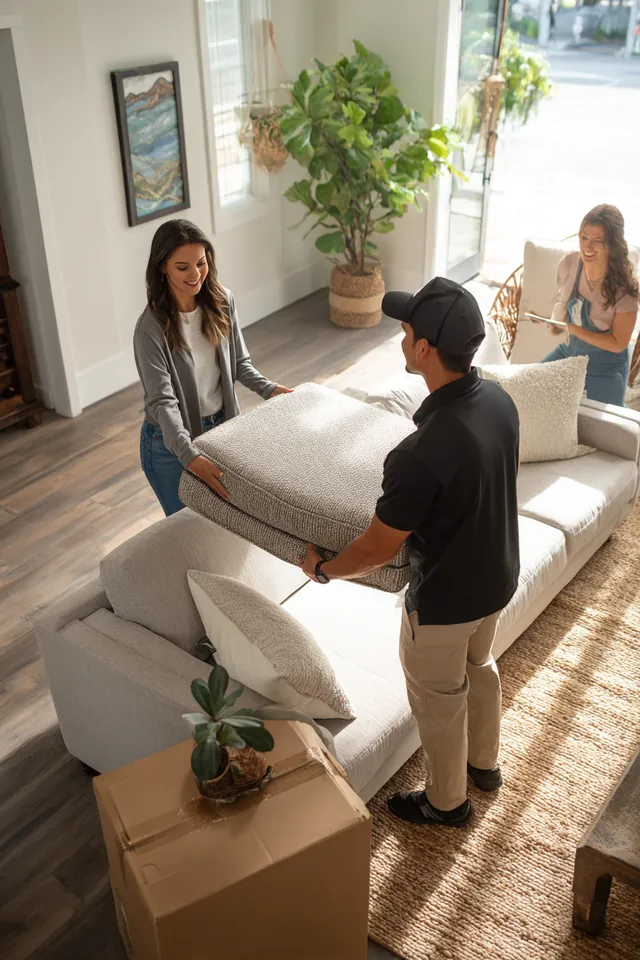
A couple with a young daughter needs a sofa that will survive daily life, plus a delivery and haul-away fee. A durable model with delivery runs around $1,700 to $2,000. Financing through the store is one option; a fixed-rate personal loan is another, and the comparison is covered further down.
An insurance deductible
Many auto and renters policies carry deductibles of $1,000 to $2,000. After an accident or a burst pipe, that money is due before repairs start, and a short personal loan can keep the claim moving while the insurer pays the rest of the bill directly to the repair shop or contractor.
A larger repair
Transmission work, a major appliance replacement or a dental procedure with a lab-made crown can each fall in this range. Getting a written estimate first keeps the request accurate.
Estimated payments on a $2,000 loan
A $2,000 loan typically costs about $178 to $195 a month over 12 months, or about $66 to $85 a month over 36 months, at APRs between 12% and 30%, before any fees.
Payments below are calculated with the standard amortization formula and rounded to the cent; interest is rounded to the dollar.
| Term | 12% APR | 18% APR | 30% APR |
|---|---|---|---|
| 12 months | $177.70/mo · $132 interest | $183.36/mo · $200 interest | $194.97/mo · $340 interest |
| 18 months | $121.96/mo · $195 interest | $127.61/mo · $297 interest | $139.34/mo · $508 interest |
| 24 months | $94.15/mo · $260 interest | $99.85/mo · $396 interest | $111.83/mo · $684 interest |
| 36 months | $66.43/mo · $391 interest | $72.30/mo · $603 interest | $84.90/mo · $1,057 interest |
The bottom-right corner is the cautionary number. Stretching a $2,000 loan to 36 months at 30% APR means paying more than half the original amount again in interest. The top-left corner shows the opposite: a strong credit profile and a one-year term keep interest near $132. Most borrowers land somewhere in between, and the goal is to move as close to that top-left cell as your budget allows.
Representative example and what it means
Representative example: a $2,000 loan on a 12-month schedule at a 24% APR comes to near $189.12 monthly, which adds up to around $269 of interest and roughly $2,269 paid back overall. These are estimates; the lender you pick sets the final terms.
Put that next to a typical budget. If your take-home pay is $3,400 a month and your fixed costs, including rent, groceries, utilities, insurance and a phone plan, add up to $2,900, you have about $500 left. A $189 payment uses more than a third of that margin. That may be fine, but it leaves less room for surprises. Choosing 18 months at the same rate drops the payment to about $133.40 and raises interest to roughly $401. Neither option is automatically better; the right one is the payment you can make every month without strain.
$2,000 loan vs store or retailer financing
A fixed-rate personal loan gives you a known total cost from the first day, while store financing can be cheaper or much more expensive depending on whether it is truly zero-interest or uses deferred interest.
Furniture and electronics retailers often advertise plans such as no interest for twelve months. There are two very different versions:
- True zero-interest plans: no interest accrues during the promotion, and any remaining balance starts accruing interest only afterward.
- Deferred-interest plans: interest builds quietly from the purchase date and is charged in full if any balance remains when the promotion ends. Rates on these accounts are often high.
Personal loans avoid that cliff. The payment and end date are set, and the interest cost is visible from the start. Store financing can win when you are certain you will clear the balance in time; a personal loan can win when you want predictability, or when you want to buy from a seller that does not offer financing at all, such as a used-equipment dealer or an independent furniture maker.
Income, documents and lender conditions
Lenders usually need proof of identity, verifiable income, a bank account in your name and an acceptable debt-to-income ratio, and self-employed borrowers typically supply extra documentation to show steady earnings.
Salaried and hourly workers
Recent pay stubs and a bank statement that shows matching direct deposits are usually enough. Some lenders verify employment by phone or through a payroll database.
Freelancers and gig workers
Lenders often want to see income over a longer window, because freelance pay comes in uneven amounts. Expect requests for several months of bank statements, the most recent tax return, or a profit-and-loss summary. Clean records showing regular client deposits make a strong case.
Conditions you may see
- Minimum age of 18 and residence in a state the lender serves
- A minimum monthly income threshold set by the lender
- Autopay enrollment, sometimes with a small rate discount
- A cap on total debt payments relative to income
Our guide to who qualifies for a personal loan explains how these conditions interact, and why a slightly smaller amount can sometimes improve your chances.
How your credit profile shapes a $2,000 loan offer
Credit scores, payment history and current balances drive the APR on a $2,000 loan, and at this amount the gap between a strong and a weaker credit profile can easily exceed $400 in interest.
At established lenders, personal loan APRs usually fall somewhere between roughly 6% and 35.99%, with higher pricing possible from lenders that focus on fair or weaker credit. Using the table above, a 24-month loan at 12% costs about $260 in interest, while the same loan at 30% costs about $684. A few steps before applying can move you toward the lower end:
- Pay credit card balances down below roughly 30% of their limits if you can.
- Check your credit reports for errors and dispute anything inaccurate.
- Avoid opening new accounts in the weeks before you request offers.
Sending a $2,000 request normally means only a soft credit look, so your score stays where it is. Any hard inquiry tends to wait until you have picked a $2,000 offer and the lender begins final checks. For a broader look at how APR bands differ by credit tier, see the overview of personal loan rates and APR ranges.
Comparing two $2,000 loan offers side by side
The cheaper $2,000 loan is the one with the lower total cost, including fees, and a low interest rate paired with a large origination fee can cost more than a slightly higher rate with no fee.
Suppose two lenders respond to the same request. Both offer 24 months, but the details differ:
| Detail | Offer A | Offer B |
|---|---|---|
| Interest rate | 19.9% | 15.9% |
| Origination fee | None | 6% ($120, deducted) |
| Cash you receive | $2,000 | $1,880 |
| Monthly payment | $101.69 | $97.83 |
| Total interest | $441 | $348 |
| Interest plus fee | $441 | $468 |
| APR (approximate) | 19.9% | 22.3% |
Offer B looks better at first glance because its rate and payment are lower. Once the fee is counted, though, it costs about $27 more and puts $120 less in your pocket. If you need the full amount for a lens or a sofa, Offer B would also force you to borrow more to cover the shortfall. The APR column catches this difference, which is why lenders are required to show it and why it is the most reliable single number for comparing personal loans. Northern Star Lending partners present offers in their own formats, so writing the figures into a simple grid like this one makes the decision much clearer.
A few other details deserve a look when two personal loan offers seem close: whether autopay is required for the quoted rate, how many days of grace apply before a late fee, and whether you can change your due date. Small differences in these terms rarely change the total cost much, but they can make a personal loan far easier to live with month to month.
Should you borrow $2,000, less or more?
Borrow $2,000 only when your written quote or budget lands close to that number; requesting extra raises interest and fees, while requesting too little can force a second loan with new costs.
Start from the real figure. If the lens costs $1,850 and the lender deducts a 4% origination fee, you would need about $1,927 to cover it, so a $2,000 request makes sense. If the sofa is $1,300, a smaller amount is the better choice. If the project keeps growing, for example a repair that turns into a repair plus replacement parts, it may be cleaner to look at a $2,500 personal loan once rather than borrowing twice.
A quick self-check: Would you still make this purchase if you had to save for it over six months? If yes, the loan is mostly a timing tool and is likely reasonable. If the honest answer is no, it may be worth waiting.
Requesting a $2,000 loan through Northern Star Loan
The process involves one online form, a match with independent lenders, a side-by-side review of any offers and, if you accept one, final steps completed directly with that lender.
- Describe your request. Tell us how much you need, what it is for, how you earn income and how to reach you.
- Matching. Northern Star Loan forwards the request to lenders and lending partners across the NorthernStarLending network whose loans fall between $500 and $5,000.
- Compare. Look at APR, term, monthly payment, total repayment, origination fee and late-fee policy. You are never obligated to accept.
- Close with the lender. Verification, signing, funding and servicing all happen with the lender you choose.
The matching service does not set rates or approve applications. What it does is spare you from typing identical information into one lender site after another.
Building a repayment plan that holds up
A good repayment plan for a $2,000 loan sets autopay just after income arrives, includes a small buffer for irregular months and directs any extra money toward principal early in the term.
For freelancers, a practical approach is to move one month’s payment into a separate account as soon as each large client invoice clears, so a slow month does not cause a late payment. For salaried borrowers, scheduling the debit for the day after your paycheck lands avoids overdrafts. If your lender allows early repayment without a penalty, even an extra $25 a month on a 24-month loan at 18% shortens the term by a few months and trims the interest. Once the balance is gone, redirecting that same payment into savings rebuilds a cushion quickly, so the next large expense may not require borrowing at all.
Frequently Asked Questions
How much is the monthly payment on a $2,000 loan over 24 months?
At 18% APR, a $2,000 loan over 24 months costs about $99.85 a month and roughly $396 in total interest. At 30% APR the payment rises to about $111.83. These are estimates; the lender sets your actual terms.
Can freelancers qualify for a $2,000 personal loan?
Many lenders accept self-employment income if you can document it, usually with bank statements, recent tax returns or invoices. Lenders often look for consistent deposits over several months rather than a single large payment.
Is a $2,000 loan cheaper than store financing for furniture?
It depends on the terms. A zero-interest store plan can be cheaper if you pay it off in time, but deferred-interest plans can charge back interest if a balance remains. A fixed-rate loan has a set cost from day one.
How fast can I get $2,000 after approval?
Many lenders can send funds as soon as the next business day after approval and verification, while others take several business days. Timing depends on the lender and your bank, so plan for some variation.